Overview
In the AFE region, progress on ending extreme poverty and promoting shared prosperity is held back by persistent energy poverty. COMESA and the World Bank recognize that wider access to electricity through ASCENT does not automatically lead to higher productivity or well-being, especially in rural areas.
PURE is defined as the use of electricity from renewable sources in income-generating activities that produce goods and/or services, contributing both to local economic growth and to the economics of energy systems.
Why PURE Matters
ASCENT PURE Value Proposition
• Generates revenue for users and supports socio-economic development
• Contributes to climate resilience, adaptation, and mitigation
• Is linked over time to productivity and income growth, new enterprises, and greater use of time- and labor-saving appliances
• Enhances quality of life and strengthens health and education outcomes
• Stimulates electricity demand, raising revenues for mini-grid developers and improving the viability of their business models
• Can, in the longer term, help enable reductions in tariffs and subsidies
For MSMEs and communities:
Expanding productive uses raises incomes and supports broader socioeconomic development—higher productivity, more jobs, and more resilient community well-being.
For electricity suppliers and market actors: Higher electricity spending from productive-use customers strengthens the financial sustainability of grid and mini-grid operators. For off-grid solar providers, appliance dealers, credit providers, and investors, greater productive use expands markets and, for some suppliers, supports the socioeconomic development of the rural communities they serve.
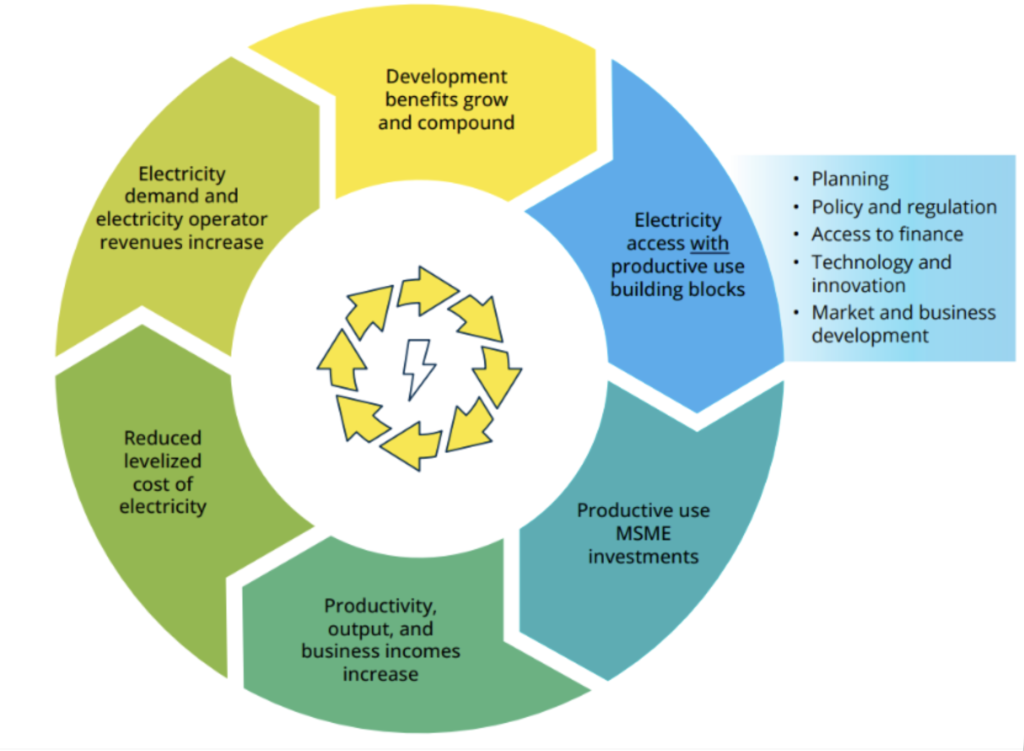
PURE Virtuous Cycle of Development
ASCENT’s virtuous cycle of productive electricity use is designed to begin as soon as—and in some cases even before—communities gain access to electricity. Access is expanded through the national grid, mini- and micro-grids, and individual systems for homes, farms, and small businesses.
With dedicated PURE interventions, productive uses develop earlier and faster:
• Early productive use leads to higher incomes for households, farms, and businesses
• Higher incomes lead to more appliance and machinery purchases, increasing earnings and electricity demand
• Higher demand improves the financial viability of energy service providers, allowing further investment in electricity quality and availability